You Won’t Believe What These Temples in Madurai Are Hiding
Walking through Madurai feels like stepping into a living epic. The air hums with chants, the scent of jasmine weaves through bustling lanes, and towering gopurams pierce the sky like stone fireworks. I came for the temples, but stayed for the soul of South Indian architecture — layered, vibrant, and deeply spiritual. Every corridor tells a story; every carving breathes history. This isn’t just sightseeing — it’s immersion in a centuries-old artistic heartbeat that still pulses strong today.
The First Glimpse: Meenakshi Amman Temple at Dawn
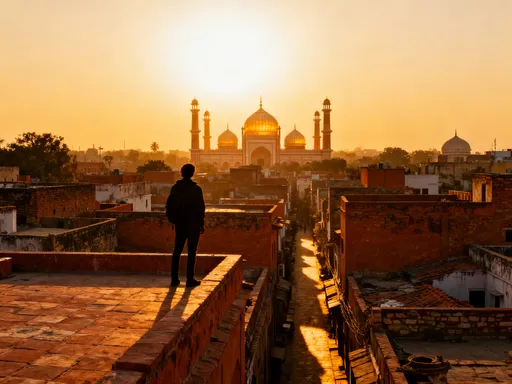
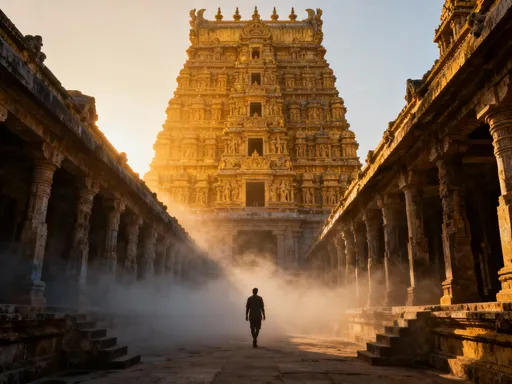
Arriving in Madurai before sunrise, the city stirs with quiet intensity. The streets, soon to be crowded with vendors, pilgrims, and curious travelers, are still washed in a soft, pre-morning hush. The first destination for most visitors — and the spiritual heart of the city — is the Meenakshi Amman Temple. Approaching its eastern gateway, the Rajagopuram rises 170 feet into the sky, a sculpted mountain of deities, dancers, and mythological beasts. As dawn breaks, golden light spills across the stucco figures, illuminating eyes, ornaments, and flowing garments as if awakening them from sleep. This moment — when the first rays touch the temple’s apex — is more than a visual spectacle; it is a daily renewal of sacred energy.
The Meenakshi Amman Temple, dedicated to the goddess Meenakshi (a form of Parvati) and her consort Sundareshwar (Shiva), has stood at the center of Madurai for over a thousand years. Though much of the current structure dates to the 16th and 17th centuries under the Nayak dynasty, the site itself is mentioned in Tamil literature as early as the 6th century BCE. The temple’s scale is staggering: it spans 14 acres, enclosed by four towering gopurams, each more ornate than the last. The eastern tower, visible from miles away, serves as a celestial welcome, drawing devotees and visitors alike into a world where art, devotion, and architecture converge.
What makes the Dravidian style so distinct is its emphasis on verticality and symbolic order. The gopurams are not merely decorative; they represent the transition from the mundane to the divine. Each layer of sculpture corresponds to a level of spiritual ascent, with guardian deities at the base and celestial beings near the summit. The symmetry of the towers reflects cosmic balance, while the pyramidal form echoes the sacred mountains of Hindu cosmology. As the morning sun climbs, shadows shift across the carvings, revealing new details with every passing minute — a dynamic interaction between light and stone that transforms the temple into a living canvas.
Inside the outer walls, the sound of temple bells begins to ring, a metallic chorus that has echoed through these courtyards for centuries. The bells are rung not only to mark time but to purify the air and ward off negative energies, according to tradition. For visitors, the sound serves as a grounding presence, a reminder that this is not a static monument but a place of active worship. The resonance travels through the stone corridors, bouncing off granite pillars and reverberating in the open mandapas, creating an acoustic atmosphere that feels both ancient and immediate. In that early light, with chants rising and incense curling through the air, the temple does not feel like a relic — it feels alive.
Inside the Sacred Walls: A Closer Look at Temple Design
Once inside the Meenakshi Amman Temple, the layout unfolds in concentric layers, each courtyard (or prakaram) serving a specific ritual purpose. The outer prakarams accommodate markets, rest areas, and community gatherings, while the inner ones grow progressively more sacred, culminating in the sanctum sanctorum where the deities reside. This hierarchical design reflects the journey of the soul toward enlightenment — outer distractions give way to inner stillness as one moves closer to the divine. The pathways are wide enough for ritual processions, and the corridors are aligned precisely along the cardinal directions, emphasizing order and cosmic harmony.
One of the most breathtaking features of the temple is its mandapas — pillared halls used for gatherings, dances, and religious performances. The temple boasts 985 such pillars, each uniquely carved with scenes from Hindu epics like the Ramayana, Mahabharata, and Puranas. The Thousand Pillar Hall, though slightly fewer in number, is a masterpiece of symmetry and storytelling. Every column is a sculpture in itself: gods battle demons, sages meditate under banyan trees, and celestial dancers freeze mid-movement. Some pillars even feature musical properties — when tapped, they emit distinct notes, a testament to the advanced acoustic knowledge of the temple’s builders.
Architecture here was never purely aesthetic; it was deeply functional. The high ceilings and open courtyards promote natural ventilation, creating a cool microclimate even during Madurai’s scorching summers. The placement of windows and doorways allows for cross breezes, while the thick granite walls absorb heat during the day and release it slowly at night. Sunlight is carefully managed — narrow openings filter intense rays, while reflective stone surfaces diffuse light into dimmer chambers. These passive cooling techniques, developed centuries before modern air conditioning, demonstrate a sophisticated understanding of environmental design.
Color plays a vital role in the temple’s spiritual and visual impact. The gopurams and deities are painted in vibrant hues — saffron, red, green, and gold — each with symbolic meaning. Saffron represents purity and renunciation, red stands for power and fertility, green symbolizes life and harmony, and gold signifies the divine. These pigments, traditionally made from natural minerals and plant extracts, are reapplied during festivals and restoration efforts. Conservation teams work meticulously to preserve original colors while respecting the temple’s living nature. Unlike museums that freeze artifacts in time, here, renewal is part of the tradition — repainting is not restoration, but ritual.
Beyond Meenakshi: Hidden Architectural Gems in the Old City
While the Meenakshi Amman Temple draws the majority of attention, Madurai’s old city holds quieter, equally remarkable architectural treasures. One such site is the Koodal Azhagar Temple, dedicated to Vishnu in his form as the divine bridegroom. Though smaller in scale, it dates back to the Pandyan era and features elegant Vijayanagar-period additions, including ornate mandapas and finely carved pillars. Unlike the towering gopurams of Meenakshi, Koodal Azhagar’s entrance is more subdued, reflecting the Vaishnavite emphasis on humility and devotion. Yet inside, the craftsmanship rivals that of its more famous neighbor — delicate lotus motifs, intricate ceiling panels, and sculptures that seem to breathe with emotion.
The contrast between Pandyan and Nayak architecture reveals the evolution of South Indian temple design. The Pandyans, who ruled from the 3rd century BCE to the 14th century CE, favored simplicity and proportion. Their temples were modest in height but rich in symbolism, often built around natural features like hills or water bodies. The Nayaks, who came later, embraced grandeur and spectacle. They expanded existing temples, added massive gopurams, and introduced more elaborate ornamentation. Walking through Madurai is like reading a timeline in stone — from the restrained elegance of early Dravidian shrines to the exuberant storytelling of later periods.
Even beyond formal temples, the city’s streets are an open-air museum of traditional architecture. Rows of Chettinad-style homes, built by wealthy merchants, feature carved wooden doors, polished lime floors, and central courtyards for light and ventilation. These homes, with their Burmese teak and Italian marble, reflect centuries of trade and cultural exchange. Temple tank corridors — raised walkways surrounding sacred water bodies — double as community spaces where elders gather, children play, and rituals are performed. Market gateways, often adorned with small shrines, mark the transition from commerce to sacred space, blurring the line between daily life and devotion.
What makes Madurai extraordinary is how seamlessly architecture integrates with everyday rhythm. Temples are not isolated monuments but active participants in urban life. A priest walks to morning puja past fruit vendors arranging mangoes. A schoolgirl in uniform pauses to light a lamp before class. A carpenter repairs a chariot wheel in preparation for the next festival. The buildings are not preserved behind glass — they are used, touched, lived in. This continuity of function is what gives Madurai its authenticity, transforming the city into a living laboratory of cultural endurance.
Materials and Mastery: How These Structures Have Stood the Test of Time
The durability of Madurai’s temples is no accident. Built primarily from granite, a hard and weather-resistant stone, these structures have withstood monsoon rains, extreme heat, and centuries of human activity. The granite was quarried locally and transported using traditional methods — rollers, ropes, and animal labor — a feat of logistics that required meticulous planning. Once in place, the stones were shaped with chisels and hammers by generations of sthapathis, the master architects and sculptors who inherited their knowledge through oral tradition and apprenticeship. These artisans were not just builders; they were philosophers, astronomers, and mathematicians, trained in the ancient texts of Vastu Shastra and Shilpa Shastras.
One of the most remarkable aspects of temple construction is the use of lime mortar, a natural binding agent made from burnt limestone, jaggery, and plant extracts. This organic mix is flexible, allowing the structure to absorb minor seismic movements without cracking. Unlike modern cement, which is rigid and prone to stress fractures, lime mortar actually strengthens over time, forming a crystalline bond with the stone. This technique, combined with interlocking stone joints and precise weight distribution, has enabled temples to survive earthquakes that would have destroyed less resilient buildings.
Passive cooling and ventilation were also engineered into the design. The high ceilings of mandapas create thermal stacks, drawing hot air upward and allowing cooler air to circulate below. Courtyards act as wind tunnels, channeling breezes through the complex. Water tanks, often located at the center or near the entrance, provide evaporative cooling, lowering the ambient temperature. These features, developed without modern technology, reflect a deep understanding of climate-responsive architecture — principles now being revisited in sustainable urban design.
Yet preservation today faces real challenges. Air pollution, rising humidity, and the sheer volume of visitors contribute to the erosion of carvings and pigments. The constant touch of hands, the soot from oil lamps, and the vibrations from foot traffic all take a toll. Conservation efforts are ongoing, led by the Archaeological Survey of India and temple trusts, but balancing accessibility with protection is difficult. Cleaning must be done with soft brushes and natural solutions to avoid damaging delicate surfaces. Restoration work follows strict guidelines to ensure authenticity, using traditional materials and methods whenever possible. The goal is not to make the temples look new, but to honor their age and continued use.
Ritual as Architecture: The Living Function of Sacred Spaces
The Meenakshi Amman Temple is not a museum — it is a working sanctuary, shaped and reshaped by daily ritual. The layout is designed to support a precise sequence of activities: from early morning abhishekam (ritual bathing of the deity) to evening aarti (lamp offering). The sanctum is positioned at the geometric center, aligned with the rising sun, so that the first rays illuminate the idol during key festivals. Circumambulation paths (pradakshina) guide devotees in clockwise movement, symbolizing the journey around the cosmic axis. Thresholds between spaces are marked by intricately carved doorframes, signaling transitions from the profane to the sacred.
Festivals transform the temple into a dynamic stage for community expression. The annual Chithirai Festival, which reenacts the divine wedding of Meenakshi and Sundareshwar, draws hundreds of thousands of visitors. The temple’s architecture amplifies the celebration — processional routes are wide enough for ornate chariots, and viewing galleries allow crowds to witness the rituals. During the Ashtalakshmi Karagattam, women balance decorated pots on their heads while dancing through the corridors, a tradition that blends devotion, grace, and endurance. The temple’s acoustics carry the rhythm of drums and chants, turning the entire complex into a resonant vessel of sound and movement.
This living use is what distinguishes Madurai’s temples from archaeological ruins. The stones are not frozen in time; they are part of an ongoing conversation between past and present. Every act of worship — a folded hand, a whispered prayer, a flower offering — adds to the temple’s spiritual energy. The architecture supports this flow, guiding movement, focusing attention, and creating spaces for both solitude and community. In this way, the temple is not just a place to visit — it is a participant in the lives of those who enter.
Modern Encounters: Tourism, Accessibility, and Respectful Engagement
As Madurai becomes an increasingly popular destination, the balance between preservation and access grows more delicate. Visitors are welcome, but certain guidelines help maintain the temple’s sanctity. Modest clothing is required — shoulders and legs must be covered — and footwear must be removed before entering sacred areas. Photography is allowed in outer courtyards but restricted near sanctums out of respect for ongoing rituals. Silence is encouraged in prayer halls, and visitors are asked to move clockwise during circumambulation.
Recent improvements have made the temple more accessible without compromising its integrity. Multilingual signage explains architectural features and ritual practices. Rest areas with seating and drinking water are available, especially important during summer months. Audio guides, available in multiple languages, offer in-depth commentary on history and symbolism, enriching the experience for international travelers. These updates reflect a thoughtful approach — enhancing understanding while preserving authenticity.
Crowd management is particularly crucial during festivals like Chithirai, when visitor numbers surge. Temporary barriers, volunteer guides, and timed entry systems help regulate flow and reduce structural strain. Authorities monitor foot traffic to prevent overuse of certain pathways, and conservation teams conduct post-festival inspections to assess wear and tear. These measures ensure that celebration does not come at the cost of long-term damage.
Responsible tourism plays a vital role in preservation. Travelers are encouraged to support local artisans by purchasing handmade souvenirs, to respect quiet zones, and to avoid touching carvings. Many tour operators now offer heritage walks that emphasize cultural sensitivity and environmental awareness. By engaging mindfully, visitors become stewards of the site, contributing to its sustainability. Tourism, when guided by respect, can be a force for conservation rather than degradation.
Why This Architecture Matters Today
The temples of Madurai are more than religious sites — they are blueprints for sustainable, human-centered design. Their passive cooling systems, earthquake-resistant construction, and integration with natural elements offer lessons for modern urban planning. In an age of concrete and glass, these stone structures remind us that buildings can be both beautiful and functional, rooted in climate, culture, and community. Cities around the world are beginning to look to traditional models like Madurai’s for inspiration in creating resilient, livable spaces.
Madurai itself stands as a model of a heritage city that has evolved without losing its soul. Unlike places where historic districts are preserved as static exhibits, here, the past is not behind glass — it is part of daily life. Children learn history by walking through temple corridors. Artisans pass down skills from generation to generation. Festivals strengthen social bonds and cultural identity. This continuity is rare and precious, a testament to the power of shared memory and collective care.
For the individual traveler, especially those seeking meaning beyond the surface, Madurai offers a profound shift in perspective. In a world that moves quickly, where time feels fragmented and fleeting, these temples restore a sense of scale. Standing beneath a 500-year-old gopuram, one feels small in the best way — humbled by the endurance of human creativity and devotion. The carvings, the chants, the scent of flowers — they speak of a different relationship with time, one that is cyclical, patient, and deeply connected to place.
Preserving Madurai’s temples is not just about saving stone and pigment. It is about honoring a living tradition — one that teaches us how to build not just for today, but for centuries to come. These structures are not hiding secrets in the way of ancient codes or buried treasures. What they conceal — and what they reveal — is far more powerful: the enduring human desire to create beauty, seek meaning, and connect with something greater than ourselves. In their silent stone, we hear the heartbeat of a culture that refuses to be silenced.