Lost in Lahore: Where Every Street Tells a Story
Wandering through Lahore feels like flipping through the pages of a living history book—vibrant, unpredictable, and deeply human. I didn’t follow a map; I followed the smell of street food, the call to prayer, and the laughter spilling from chai shops. This isn’t a city you see—it’s one you feel. From rooftop views to hidden alleys, Lahore reveals itself slowly, one breathtaking viewpoint at a time. Every corner hums with stories: of emperors and poets, of traders and families, of centuries layered like dust on ancient stone. To walk its streets is to witness a culture that honors the past while embracing the pulse of modern life. This is not just a journey through space, but through time.
The Pulse of the Walled City
Lahore’s soul beats strongest within the embrace of its historic Walled City, a labyrinth of narrow alleys and centuries-old architecture that has witnessed the rise and fall of empires. Enclosed by remnants of defensive walls and once protected by thirteen gates, this district is where the city first took root over a thousand years ago. Walking through Delhi Gate, one of the most iconic entrances, is like stepping into a living archive. The worn stone steps, polished smooth by generations of footsteps, speak of countless journeys—pilgrims, merchants, soldiers—all drawn to this crossroads of culture and commerce. Above, faded frescoes hint at forgotten opulence, their colors softened by time but still whispering tales of Mughal grandeur.
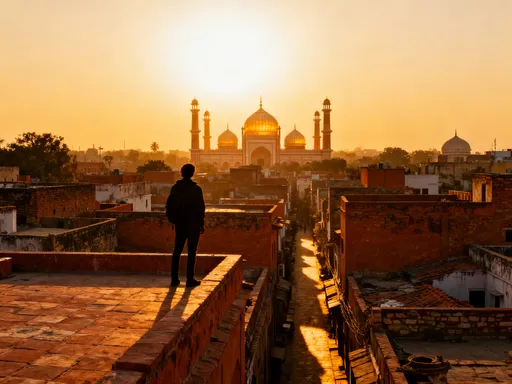
At the heart of this historic quarter stand two architectural masterpieces: the Lahore Fort and the Badshahi Mosque. These are not merely tourist destinations; they are vantage points from which the city’s layered history becomes visible. From the ramparts of the Lahore Fort, a UNESCO World Heritage Site, the view stretches across a sea of terracotta rooftops, where clotheslines flutter like prayer flags and children play on sunbaked tiles. The fort itself is a microcosm of Lahore’s evolution, with sections added by Mughal, Sikh, and British rulers, each leaving their mark on its courtyards and halls. Standing at the Alamgiri Gate as the sun begins to dip, the golden light bathes the Badshahi Mosque’s grand façade, turning marble into fire and casting long shadows over the courtyard.
The Badshahi Mosque, completed in 1673 under Emperor Aurangzeb, remains one of the largest mosques in the world. Its vast courtyard can hold over 100,000 worshippers, but even for non-worshippers, its spiritual presence is palpable. Climbing the outer staircase to a side balcony offers an unparalleled panorama: the mosque’s red sandstone walls contrast with the green dome, while the bustling activity of the city unfolds beyond its arched gateways. Here, the past is not preserved behind glass—it is lived, breathed, and constantly reinterpreted by the people who pass through its gates every day. The call to prayer echoes across rooftops, a reminder that history here is not static, but ongoing.
Exploring the Walled City on foot allows travelers to experience Lahore at human scale. There are no sweeping boulevards or modern plazas—only winding lanes where donkey carts jostle with motorbikes and where the scent of roasted chickpeas mingles with jasmine garlands sold outside shrines. Each alley seems to have its own rhythm, its own trade: one lined with coppersmiths hammering intricate designs, another with tailors stitching wedding garments by hand. This is a city that rewards slowness, where the most meaningful discoveries come not from ticking off landmarks, but from pausing to watch a grandmother rolling chapati in a doorway or listening to the banter between neighbors over a shared water pump.
Rooftop Reflections in Old Lahore
While the streets pulse with energy, some of Lahore’s most intimate and revealing perspectives are found not at ground level, but above it—on the rooftops of old havelis and modest tea houses. These elevated spaces offer quiet sanctuaries where the chaos of the city softens into a symphony of sound and light. In neighborhoods like Shahi Mohalla and Mohalla Chiriyan, traditional homes with wooden balconies and carved jharokhas open onto terraces where families gather in the evenings, sipping tea and watching the sky change color. For visitors, a growing number of rooftop cafes provide access to these private realms, offering a chance to experience the city from a more contemplative vantage.
One such spot, tucked away near Akbari Gate, is a small tea house run by a local family who converted their rooftop into a modest seating area with colorful cushions and low tables. From here, the view stretches across a patchwork of rooftops—some tiled, some flat, some covered in solar panels—where clothes dry in the breeze and kites soar on warm updrafts. It’s common to see children flying kites, their strings crisscrossing the sky like invisible threads connecting homes. Sipping nimbu pani—fresh lemonade sweetened with sugar and a pinch of salt—one begins to notice the subtle rhythms of daily life: the clatter of pots from a kitchen below, the distant ring of a bicycle bell, the soft murmur of prayer from a nearby mosque.
These rooftop moments are not about grand vistas, but about presence. They offer a rare stillness amid the urban hum, a chance to observe without rushing. As the call to prayer drifts across the rooftops, its melody rising and falling like a wave, there’s a sense of continuity—a connection between the present and centuries of devotion that have echoed through these same streets. The terracotta tiles, weathered by sun and rain, seem to absorb the city’s prayers, its joys, its sorrows. From this height, Lahore feels both vast and intimate, a city where spirituality and daily life are woven together like threads in a richly embroidered shawl.
What makes these rooftop experiences uniquely valuable is their authenticity. Unlike polished observation decks or tourist-oriented viewpoints, these spaces are part of everyday life. There are no entrance fees, no guided tours—just an invitation to sit, to look, to listen. Some visitors come specifically for the view, while others, like students or elderly neighbors, come for conversation or quiet reflection. In this way, the rooftops become informal gathering places, where stories are shared and community is reinforced. For the traveler, such moments offer a deeper understanding of Lahore—not as a destination, but as a living, breathing entity shaped by its people.
The Grand Iqbal Park Perspective
Just beyond the historic core of Lahore lies Iqbal Park, a sprawling green oasis that serves as both a recreational haven and a symbolic landmark. Once known as Minto Park, this 350-acre space is best known as the site where the Lahore Resolution was passed in 1940, a pivotal moment in the movement for an independent Pakistan. Today, it stands as a place of national memory and public life, where history and leisure coexist in quiet harmony. At its center rises the Minar-e-Pakistan, a 70-meter-tall tower built in the 1960s to commemorate the resolution. Its modernist design—a blend of Islamic and contemporary architecture—makes it a striking visual anchor, visible from many parts of the city.
From the base of the minaret, the view outward is expansive. Wide lawns stretch in all directions, dotted with families enjoying picnics, students reading under the shade of neem and jacaranda trees, and couples strolling along paved pathways. The atmosphere is one of peaceful activity, where generations gather to celebrate, reflect, or simply escape the heat. Climbing the internal staircase of the minaret offers a panoramic perspective: to the west, the dense urban fabric of the Walled City; to the east, the orderly streets of modern Lahore; and in the distance, the faint outline of the Ravi River. From this height, the city reveals its contrasts—historic and modern, dense and open, sacred and secular—all coexisting within a single frame.
The significance of Iqbal Park extends beyond its physical dimensions. It is a place where national identity is remembered and reimagined. School groups visit to learn about the country’s founding ideals, while ordinary citizens come to celebrate national holidays or fly kites on Independence Day. The park’s open spaces encourage freedom of movement and expression, making it a rare democratic space in a crowded city. Even on ordinary days, the presence of history is felt—not through monuments alone, but through the way people use the space. A young man recites poetry near the fountain; children chase pigeons across the plaza; an elderly couple sits on a bench, watching the world go by. These everyday acts become part of the park’s living narrative.
For visitors, Iqbal Park offers a different kind of viewpoint—one that is less about architectural beauty and more about social texture. It is a place to witness Lahore’s civic life in motion, where the past is not confined to museums but integrated into daily experience. The Minar-e-Pakistan, illuminated at night, becomes a beacon of collective memory, its light visible across the city. Standing at its base, one gains not only a visual understanding of Lahore’s layout, but an emotional one—of a city that carries its history with pride, yet remains open to the future.
Crossing the Ravi: A View of Change
Along the eastern edge of Lahore, the Ravi River winds its way through the landscape, a once-mighty waterway now diminished by seasonal flow and urban pressure. Yet, it remains a powerful symbol of the city’s relationship with nature and its aspirations for renewal. In recent years, the Ravi Urban Development Project has sought to transform the riverbanks into a green corridor, blending environmental restoration with urban planning. While the full vision is still unfolding, early phases have opened new viewpoints along the canal and floodplain, where visitors can observe both the natural beauty of the river and the signs of a city in transition.
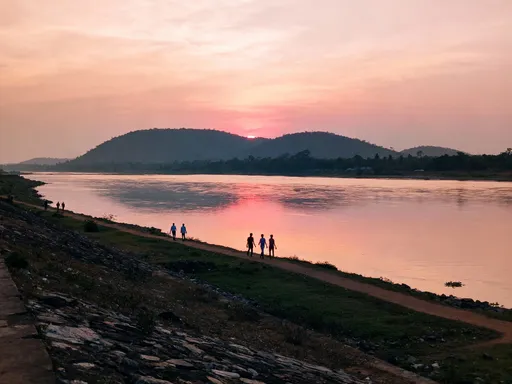
Walking along the Lahore Canal, which runs parallel to the Ravi for part of its course, offers a striking contrast between old and new. On one side, construction cranes rise like metal sentinels over future housing complexes and parks; on the other, local families gather in the evenings to walk, play, or simply sit and watch the water. The canal, once neglected, has been revitalized with walkways, benches, and landscaped gardens, making it one of the city’s most accessible public spaces. As the sun sets, the sky reflects in the slow-moving water, turning it into a ribbon of gold and crimson. It’s a peaceful scene, yet layered with meaning—a reminder that cities are not fixed, but constantly evolving.
The Ravi project represents more than infrastructure; it reflects a growing awareness of sustainable urban living. For decades, Lahore’s expansion occurred with little regard for environmental balance, leading to pollution, water scarcity, and heat islands. Now, there is a deliberate effort to reintegrate nature into the city’s fabric. The proposed parks, wetlands, and recreational zones along the river aim to provide not only beauty but ecological resilience. From a traveler’s perspective, this makes the riverfront a compelling place to observe change in real time. You can see the scaffolding of new bridges, hear the hum of construction, and also witness children flying kites in newly planted fields—proof that progress and play can coexist.
For those seeking a quieter moment, the less-developed stretches of the riverbank offer solitude and reflection. Here, fishermen cast their lines at dawn, and herons stalk the shallows in search of fish. The air is cooler, the noise fades, and the city feels distant. These pockets of calm remind us that Lahore is not just a place of crowds and commerce, but also of natural rhythms. The Ravi, though altered, still carries the promise of renewal—both for the environment and for the way people live in the city. To walk its edge is to witness a Lahore that is still rooted in its geography, yet reaching forward into a more balanced future.
Markets as Living Viewpoints
In Lahore, the true theater of daily life unfolds not in theaters, but in its markets. Anarkali Bazaar, one of the oldest in South Asia, and Liberty Market, a mid-20th-century creation, are often celebrated for their shopping, but they are equally valuable as observation decks of culture. From the upper floors of bookshops, tailor shops, or roadside dhabas, one can sit with a cup of chai and watch the human drama below. These are not passive views—they are dynamic, ever-changing scenes of negotiation, laughter, and movement that reveal the city’s soul in motion.
Anarkali, with its maze of lanes and centuries of history, feels like a city within a city. Vendors call out prices for spices, fabrics, and jewelry, their voices rising and falling in a rhythmic cadence. Women in bright shalwar kameez haggle over prices, while men browse stacks of secondhand books or sample fresh sweets from steaming trays. From a balcony overlooking the main bazaar, the scene is overwhelming in the best way—a tapestry of color, sound, and scent. The air carries the sweetness of rosewater, the sharpness of cumin, and the warmth of freshly baked naan. It’s a sensory immersion that no photograph can capture.
Liberty Market, by contrast, reflects Lahore’s modern face. With its grid-like layout and mix of boutiques, cafes, and pharmacies, it caters to a younger, more cosmopolitan crowd. Yet, even here, tradition persists. A tailor adjusts a wedding sherwani in his tiny shop, a tea vendor balances glasses on a tray as he weaves through pedestrians, and a street musician plays the harmonium near the fountain. From a second-floor restaurant, the view captures the rhythm of urban life—people rushing to appointments, friends meeting for lunch, children chasing pigeons. These moments, fleeting and unscripted, are the real highlights.
What makes markets such powerful viewpoints is their authenticity. Unlike curated tourist sites, they are spaces of genuine interaction, where people come not to perform, but to live. Watching a vendor wrap a package in newspaper, or a mother scold her child for running too fast, offers insight into values, relationships, and daily priorities. These human-level perspectives are far more revealing than any monument. For the traveler, spending time in Lahore’s markets is not just about buying souvenirs—it’s about understanding the city’s heartbeat.
Nightscapes: When the City Glows
As daylight fades, Lahore undergoes a transformation. The heat of the day gives way to a gentle breeze, and the city begins to glow. Lights come alive—golden halos around streetlamps, neon signs flickering above shops, and the soft illumination of mosques and historic buildings. The Badshahi Mosque, bathed in warm light, appears to float above the city, its minarets piercing the night sky like sentinels. From the steps of the mosque or the nearby Hazuri Bagh, the view is breathtaking: a sea of twinkling lights stretching into the distance, punctuated by the occasional flash of a rickshaw’s headlight.
Gawalmandi Food Street, one of Lahore’s most famous culinary destinations, comes alive after dark. Once a quiet residential lane, it has been transformed into a vibrant corridor of food stalls, each specializing in regional delicacies. The air fills with the sizzle of tikkas, the aroma of slow-cooked nihari, and the sweetness of falooda. From a seated vantage near the entrance, one can observe the ritual of evening dining—families sharing platters, friends laughing over cups of lassi, and visitors sampling dish after dish. The energy is electric, yet welcoming. This is not a performance for tourists; it is a nightly tradition embraced by locals.
Other spots offer quieter nocturnal views. The sidewalk along The Mall Road, lined with colonial-era buildings, provides a more subdued but equally compelling perspective. Here, couples walk hand in hand, students read under lampposts, and old men play chess on folding tables. The illumination of Gordon College or the Lahore Museum adds a touch of elegance to the scene. For those seeking elevation, some rooftop restaurants in Gulberg or Defence offer panoramic night views, where the city’s grid of lights stretches to the horizon. From such heights, Lahore feels both vast and intimate—a constellation of lives unfolding in unison.
The night reveals a different rhythm, one that balances tradition and modernity. While the call to prayer still echoes through the streets, it now mingles with the beat of music from a nearby café. The city does not sleep; it simply changes tempo. For the traveler, these nightscapes offer a chance to experience Lahore’s warmth, its hospitality, and its enduring spirit. To stand in the glow of its streets is to understand that this is a city that celebrates life, every day, in every way.
Why Wandering Beats Planning
In a world of curated itineraries and打卡-style tourism, Lahore reminds us of the power of aimless exploration. The best views in this city are not found in guidebooks or on postcards—they emerge in unexpected glances: a courtyard revealed through an open door, children playing cricket on a rooftop at sunset, or the silhouette of minarets framed by a rickshaw’s handlebars. These moments cannot be scheduled, but they can be invited. By slowing down, by looking up, by allowing oneself to get lost, the traveler opens the door to authenticity.
Lahore resists rigid planning. Its alleys twist without logic, its rhythms shift with the time of day, and its beauty often lies in the unpolished, the imperfect, the lived-in. A cracked wall with peeling paint might hide a shrine covered in fresh flowers. A narrow passage might lead to a hidden garden where elders gather to play cards. These discoveries are not accidental—they are rewards for curiosity and patience. The city reveals itself only to those willing to wander without destination, to engage without agenda.
This is not to say that landmarks are unimportant. The fort, the mosque, the minaret—all are essential. But their true meaning emerges only when seen in context, when framed by the life that surrounds them. A photograph of the Badshahi Mosque is impressive; watching a vendor sell prayer beads outside its gates, or seeing a child chase a balloon across its courtyard, makes it meaningful. Travel in Lahore is not about collecting sights, but about collecting moments—fleeting, unrepeatable, and deeply human.
So let go of the map. Let the scent of cardamom lead you down an unknown lane. Accept a cup of chai from a stranger. Climb a staircase simply because it looks interesting. In doing so, you do not just visit Lahore—you become part of its story. The city does not offer perfection; it offers presence. And in that presence, there is a kind of beauty that no filter can enhance, no caption can capture. Let Lahore reveal itself, one unscripted moment at a time.